Kitchen Cabinet Materials, Hardware and Storage Systems
A plain-English guide to the parts behind the cabinet doors: carcasses, fronts, hinges, runners, drawer systems and storage hardware that affect daily use.
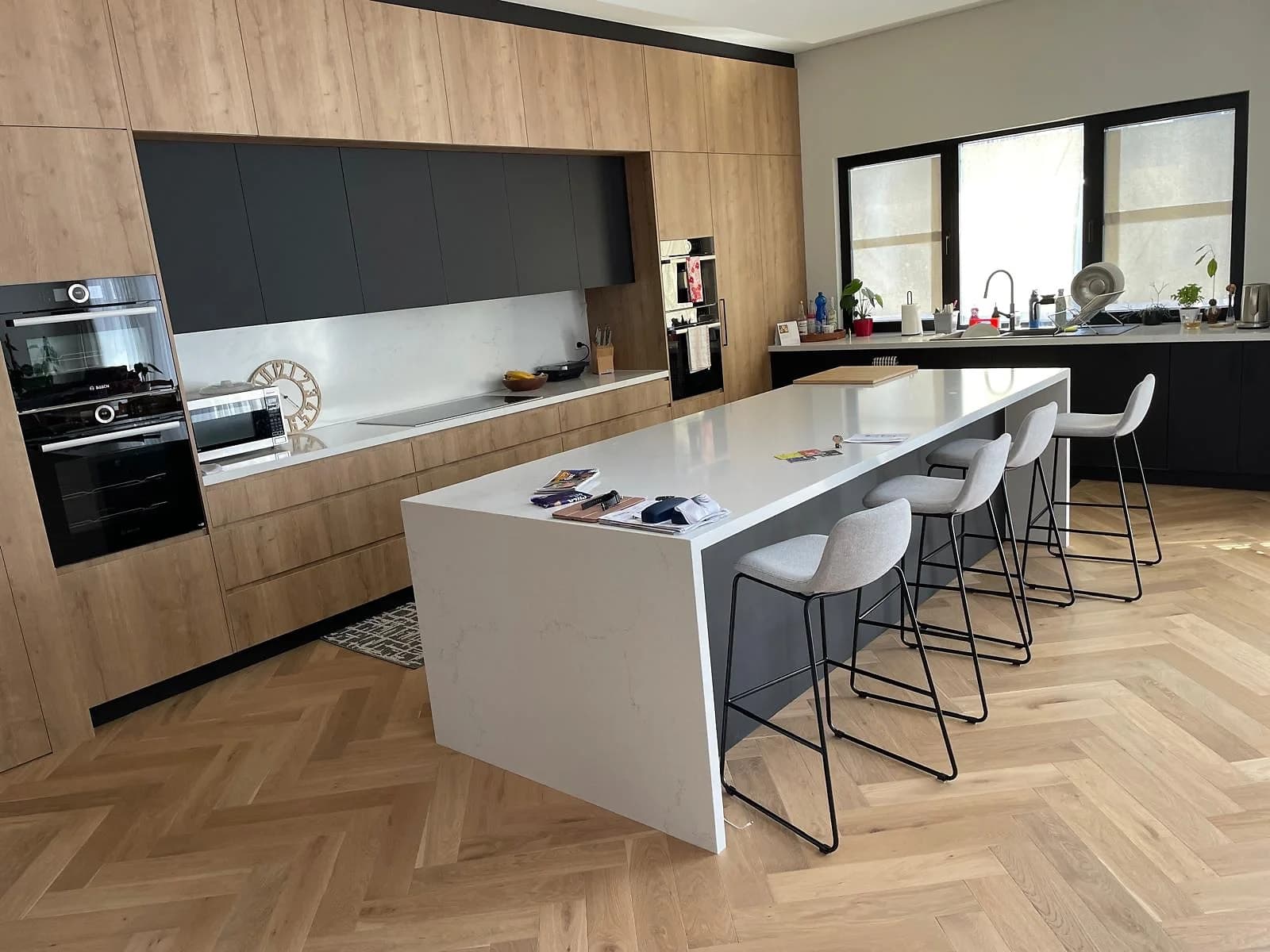
Kitchen cabinetry is a system of parts: the cabinet carcass, door or drawer front, hinges, runners, handles, internal storage and the panels that finish the visible edges. Two kitchens can look similar in a photograph but behave very differently after years of daily use because these parts were specified differently.
This guide explains the main decisions in plain language so you can discuss a custom cabinetry quote with a clearer idea of what sits behind the finish.
Cabinet carcasses
The carcass is the box behind the doors and drawers. Its dimensions, material, edge treatment and assembly determine how the storage fits the measured room. Wet areas around sinks and dishwashers need careful detailing, installation and prompt attention to any leaks; no ordinary cabinet board should be treated as waterproof.
Custom manufacturing allows cabinet widths and heights to follow the room, appliance specification and storage list rather than a catalogue of standard sizes. That is particularly useful at ceiling lines, corners and around integrated appliances.
Door and drawer fronts
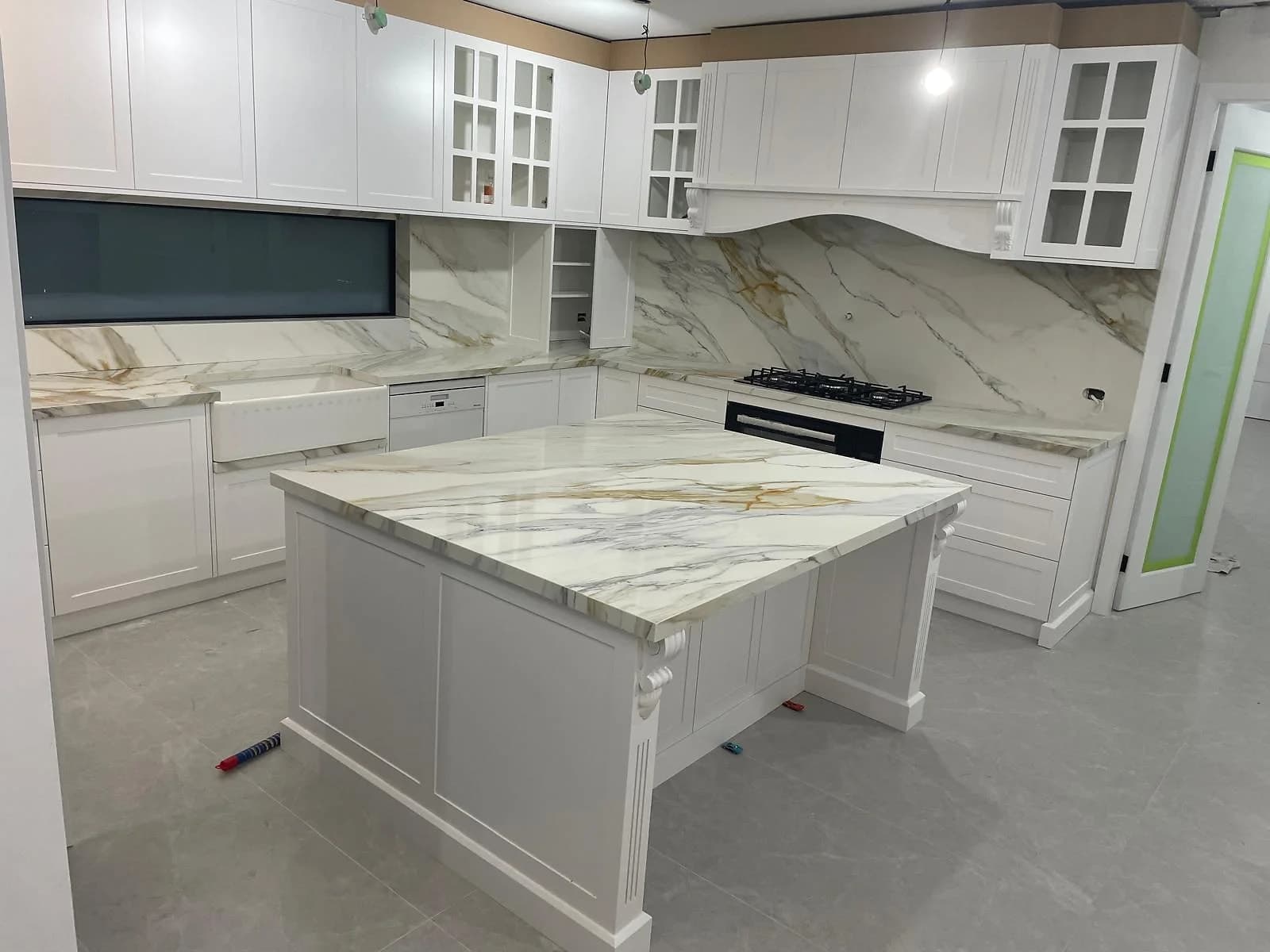
The front creates most of the visible colour and texture. Common directions include:
- durable laminate fronts in a broad range of colours and timber looks;
- painted profiles, including shaker and flat-panel doors;
- timber veneer or selected timber-look finishes;
- integrated or handleless details where the cabinet construction supports them.
Consider cleaning, fingerprints, impact, repairability, colour stability and the way edges are finished. A real finish swatch under the room's natural and artificial light gives better information than a screen.
Our guide to shaker and flat-panel cabinets compares two common profiles.
Hinges and drawer runners
Hinges control door opening, adjustment and soft closing. Drawer runners carry the load and determine how far the drawer opens and how it moves. The hardware must suit the door size, drawer width and expected contents.
Soft close is useful, but it is not the whole specification. Ask how doors will clear adjacent handles and walls, whether wide drawers are appropriate for the load, and how the hardware can be adjusted or serviced.
Handles and integrated pulls
Handles affect both appearance and daily comfort. Small knobs, bar pulls, edge pulls and integrated profiles all ask different things of the hand and the cabinet front.
Check:
- grip with wet or full hands;
- projections near corners and walkways;
- consistency across doors, drawers and appliance panels;
- how the finish will wear and clean;
- whether an integrated pull reduces useful internal height.
A minimal handle is not automatically easier to use. Test the actual piece.
Drawer organisation
Internal dividers work best when they follow what will be stored. Cutlery, utensils, plates, pots, pantry packets and waste all need different depths and loads. Fixed organisers can look ordered but may become restrictive if they were selected without an inventory.
Begin with the drawer group, then add the simplest divider or insert that keeps its contents stable and visible.
Pantry systems
Tall pantry options include adjustable shelves, internal drawers and pull-out hardware. The right choice depends on visibility, reach, load and cost.
Internal drawers bring contents forward and can make deep cabinets easier to use. Fixed shelves are simple and flexible but can hide items at the back. Large moving pull-outs need hardware suited to the weight and enough clearance to operate without blocking the kitchen.
Corner storage
Corner mechanisms can improve access, but they trade internal volume, cost and moving parts for convenience. Compare the mechanism with using more drawers in the adjacent run or closing part of the corner. The best answer is the one the household will use comfortably every day.
Waste, cleaning and utility storage
Plan bins close to preparation and cleaning. Confirm the number and size of waste streams, then make sure the cabinet does not conflict with the dishwasher or main aisle. Cleaning products need a secure, appropriate location away from food and children.
Appliance integration
Integrated refrigerators, dishwashers, ovens and rangehoods need exact model information, ventilation, door clearances and service access. Appliance panels change hinge and weight conditions, so the chosen product must be known before manufacture.
Hardware should solve a named problem
Choose each organiser, pull-out and mechanism because it improves access to a known group of items. More moving parts are not automatically better storage.
What to include in the cabinetry brief
Bring the appliance list, storage inventory, preferred door direction, handle samples and photos of the current problem areas. H&R Kitchens can then plan the carcasses, fronts and hardware as one measured kitchen cabinetry and joinery package.
Look at the storage as well as the finish
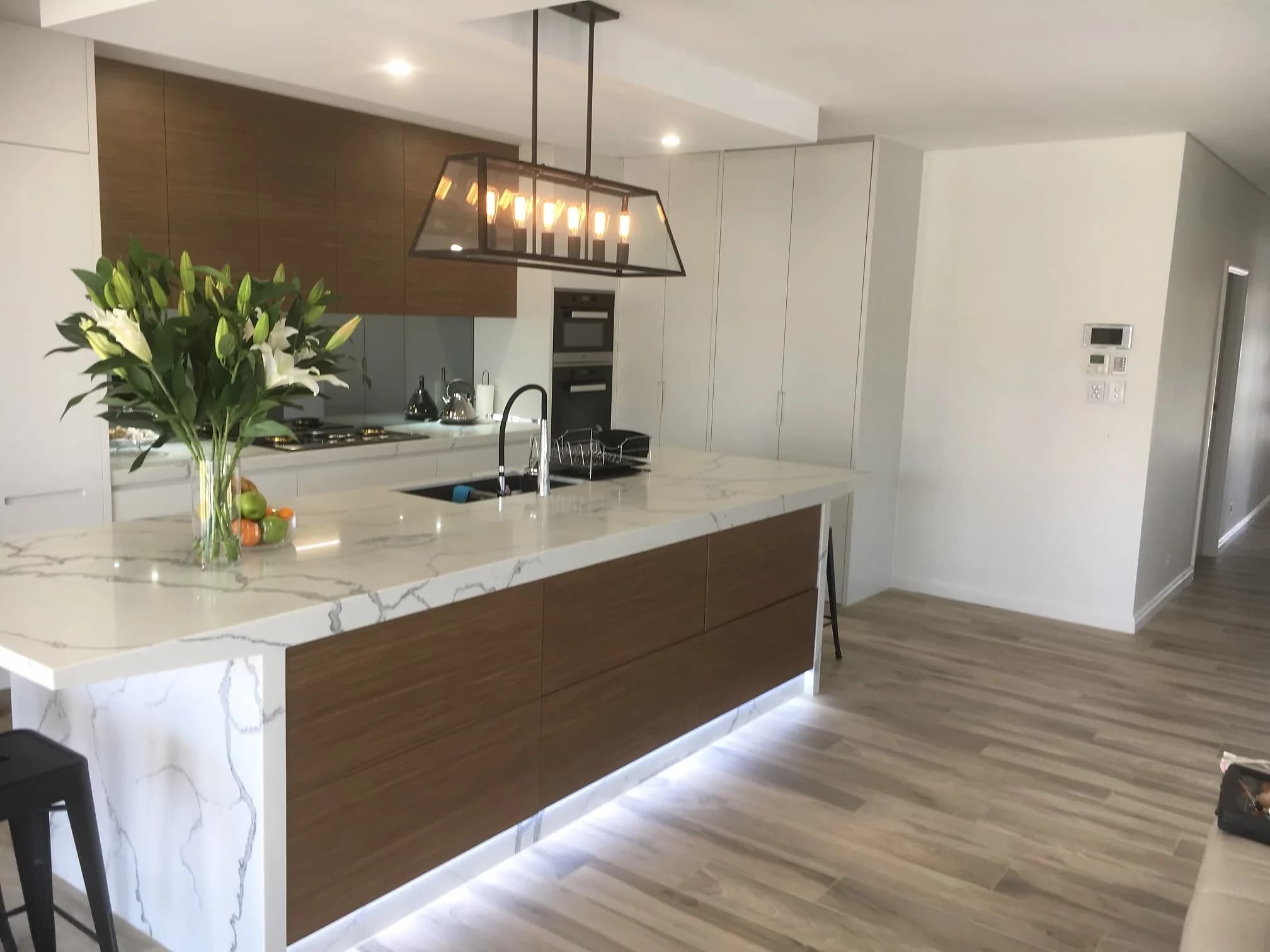
In the Guildford kitchen, wide drawers sit alongside tall pantry and appliance cabinetry. The Baulkham Hills wardrobe uses a different mix of hanging, drawers and display storage. These examples show why the cabinet interior follows what it needs to hold; they do not establish a hardware brand or board specification.
Frequently asked questions
What is the difference between a cabinet and a cabinet door finish?
The cabinet carcass is the storage box. The door or drawer front is the visible face. They can use different materials suited to their different roles.
Is soft-close hardware enough to judge quality?
No. Door size, hinge quantity, drawer load, adjustment, cabinet construction, edge detail and installation all matter alongside the closing action.
Do I need a pull-out in every corner?
No. Compare the access benefit with cost, lost volume and maintenance. Better drawers on the adjacent runs may be more useful.