Shaker vs Flat-Panel Cabinet Doors: How to Choose
Shaker or flat-panel? How the two most popular cabinet door styles compare on look, cleaning, cost and the kind of kitchen they suit — with tips for getting the detail right.
The short answer: shaker doors have a framed centre panel that reads classic and a little traditional, while flat-panel doors are a single smooth slab that reads clean and modern. That difference in the face of the door is the heart of the shaker vs flat panel cabinets question, and it shapes how the kitchen feels, how easy it is to wipe down, and which finishes suit it. Neither style is better. They suit different homes and different ways of cooking, and below is a plain walkthrough to help you land on the right one.
What is a shaker door
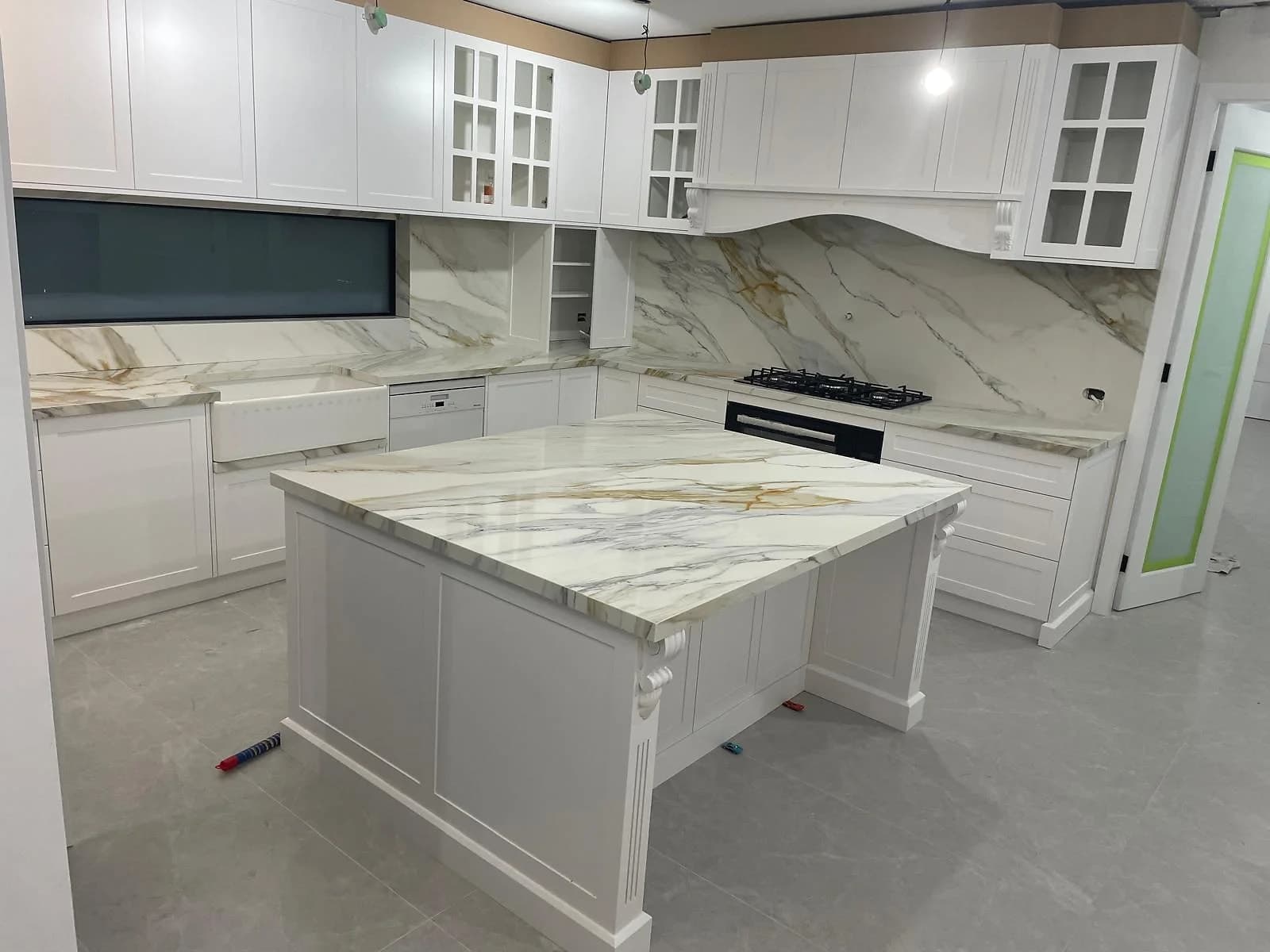
A shaker door is built from five pieces: four flat rails and stiles that form the frame, plus a flat centre panel that sits recessed inside it. The name comes from the Shaker furniture tradition, where simple, well-made joinery did the talking instead of carving or ornament. You get a defined square edge around the panel and a shadow line where the frame meets the centre. That bit of depth is what makes the door look considered rather than plain.
Shaker reads as timeless. It sits comfortably in a Federation cottage, a renovated terrace, a Hamptons-style coastal home or a country kitchen, and it can lean contemporary too if you paint it in a soft muted colour and pair it with simple hardware. Because the profile is restrained, it ages well and rarely looks dated.
The trade-off is the groove. The recess around the panel and the inside corners of the frame collect a little more cooking grease and dust than a flat face, so they want an occasional wipe with a cloth rather than a quick swipe. It is minor, but worth knowing if low maintenance sits high on your list.
What is a flat-panel (slab) door
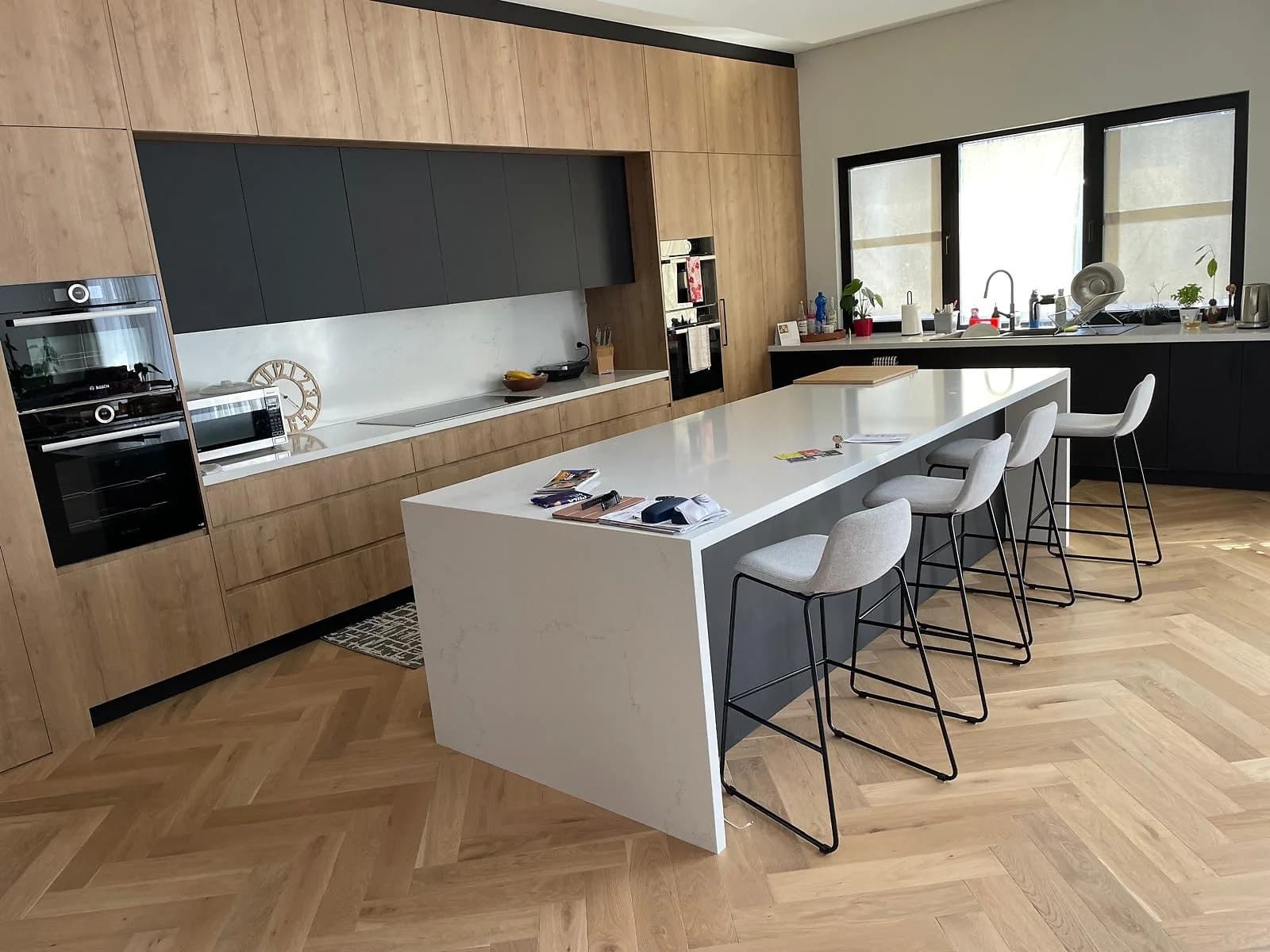
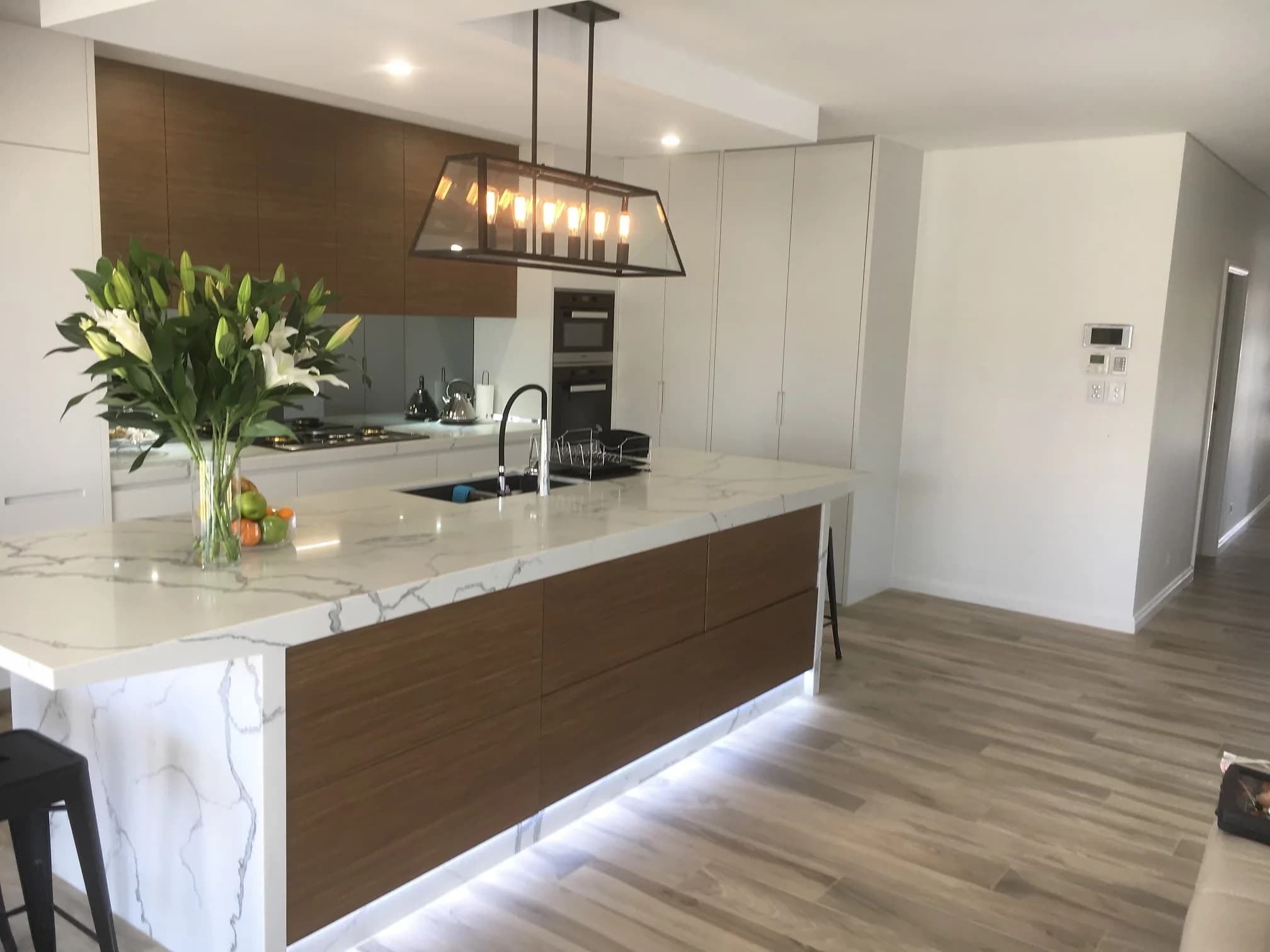
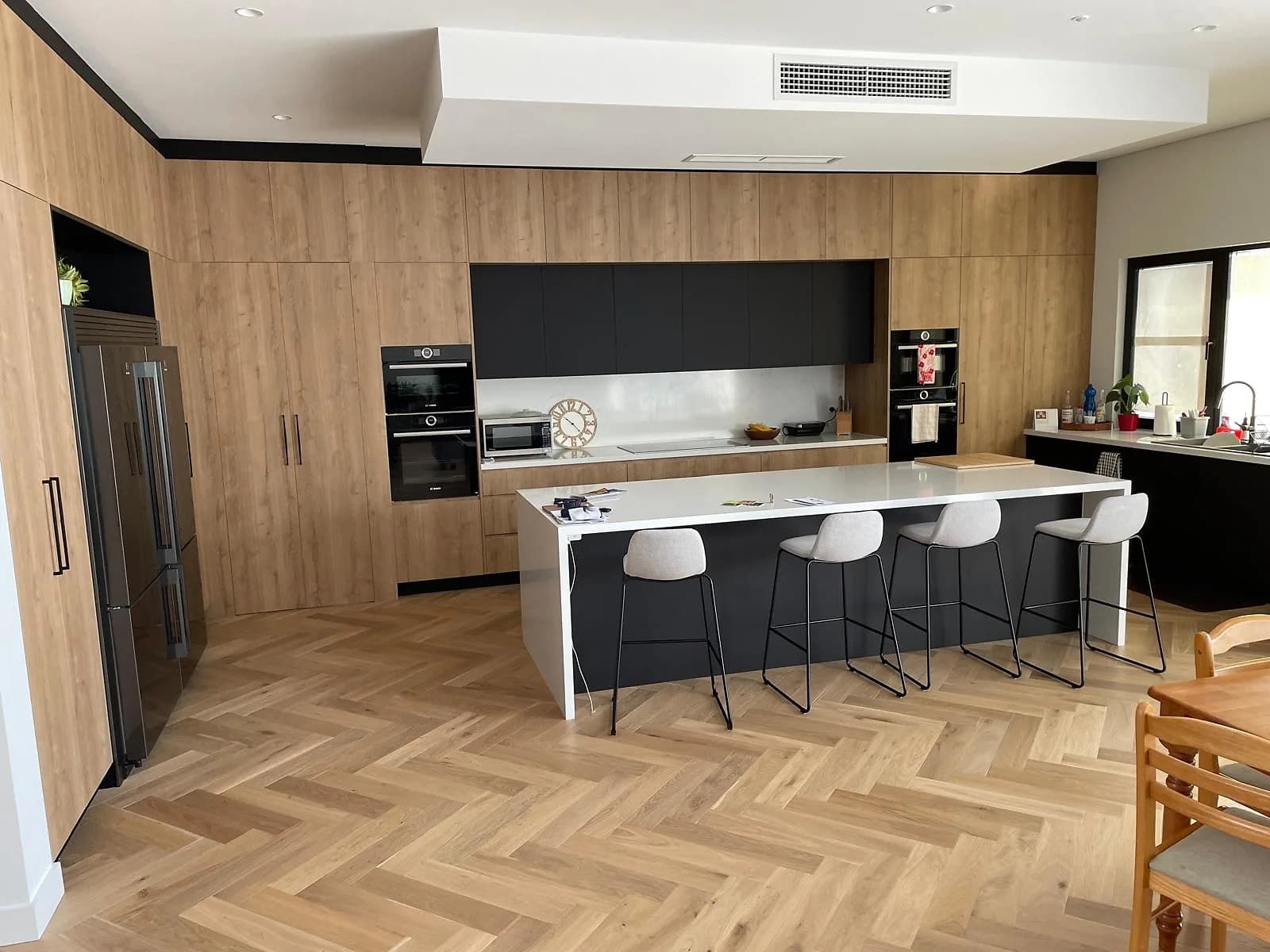
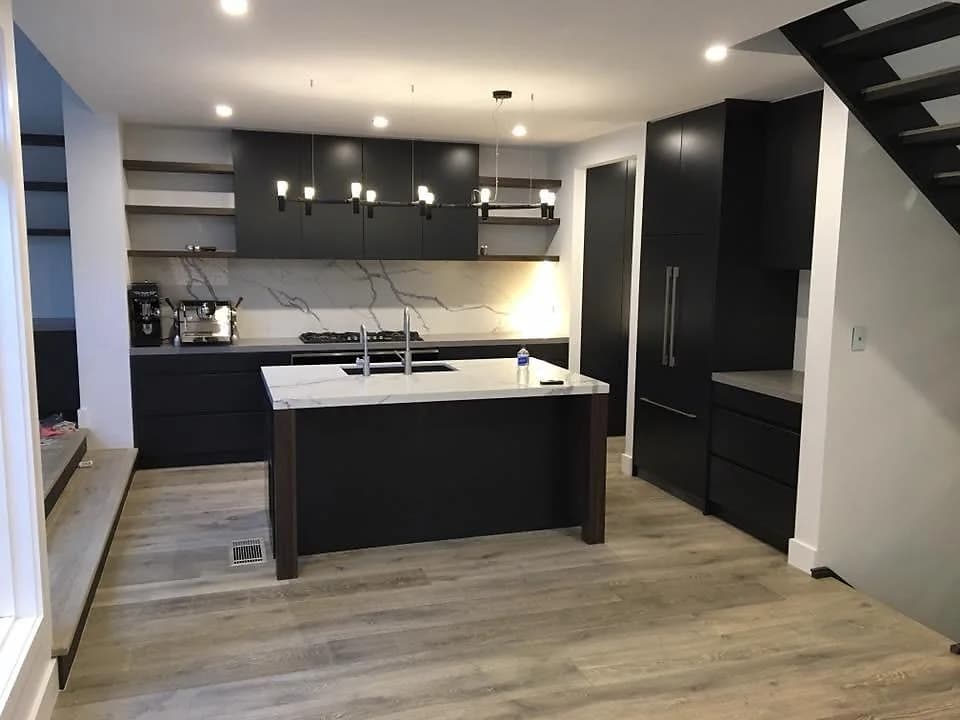
A flat-panel door is exactly what it sounds like: one smooth slab with no frame, no recess and no moulding. The whole face is in a single plane. This is the look most people picture when they think modern, minimalist or European, and it lets the material itself carry the design. A flat door in a warm timber grain, a deep matte colour or a high-gloss finish becomes the feature.
Because there are no grooves, a slab door is the easiest cabinet style to keep clean. A wipe across a flat surface and you are done, which is part of why flat-panel is so popular in busy family kitchens. It also pairs well with handleless designs, where a routed finger pull or a recessed channel replaces the handle entirely for an unbroken run of doors.
The flip side is that a flat door shows everything. The finish and the join lines do the work, so the quality of the material and the build really matters. A well-made slab door in a suitable finish can look sharp for years; a poor substrate or edge detail becomes visible quickly. Ask how the kitchen cabinetry and joinery specification covers the substrate, edging and finish before you compare quotes.
Shaker
- Look: classic, framed, with a defined shadow line
- Cleaning: wipe the panel and the inside corners now and then
- Suits: Federation, Hamptons, coastal, country and transitional homes
- Finishes: painted colours and muted tones flatter the profile
Flat-panel (slab)
- Look: clean, modern and minimal
- Cleaning: a single wipe across a smooth face
- Suits: contemporary, minimalist and European-style homes
- Finishes: timber grains, matte colours, gloss and handleless runs
How shaker and flat-panel compare
Here is the same information side by side, factor by factor, so you can weigh what matters most to you.
| Factor | Shaker | Flat-panel |
|---|---|---|
| Look and feel | Classic, framed, timeless | Clean, modern, minimal |
| Ease of cleaning | Slightly more effort around the panel | Easiest; one flat surface |
| Profile and grooves | Recessed centre panel with a defined edge | No grooves; a single smooth slab |
| Kitchen styles it suits | Period, coastal, Hamptons, country, transitional | Contemporary, minimalist, European |
| Hardware pairing | Knobs and cup handles, or simple bar pulls | Slim bar handles or fully handleless |
Mix the two if it helps
Some kitchens use shaker on the main perimeter and flat-panel on an island, or the reverse. Done with intent, mixing styles can soften a modern room or add a quiet feature without it looking busy.How to choose for your kitchen
Three honest questions will get you most of the way.
Start with the home's style. The kitchen should belong to the house, not fight it. If you live in a period home, a terrace or a coastal-style build, shaker tends to settle in naturally and feel like it has always been there. If your home is newer, open-plan or leans minimalist, a flat-panel slab usually looks more at home and keeps the lines clean. Look at the doors, skirting, cornices and windows you already have and let them guide you rather than choosing in isolation.
Then think about how the kitchen is actually used. A household that cooks hard every night and has young kids may value the easy wipe-down of a flat face. If you love a more traditional, furniture-like look and do not mind the occasional pass with a cloth, shaker repays the small effort with character. Be honest about your cleaning habits, not your aspirations.
Last, match the finish to the door. Painted and muted colours flatter shaker because the shadow line gives the colour something to catch. Flat-panel comes alive in a timber grain, a deep matte or a gloss, where the uninterrupted surface lets the material speak. Hardware follows the same logic: knobs and cup handles suit shaker, while slim bar pulls or a handleless finger-pull suit a slab. None of this is fixed law, but it is a reliable starting point. Working these decisions through together is the core of good kitchen design, where door style, finish, hardware and layout are settled as one package rather than picked piecemeal.
H&R Kitchens plans shaker and flat-panel cabinetry around the measured room, door profile, finish, storage and appliance requirements. When you are ready, explore custom kitchens or send the room details and the styles you are comparing.
Frequently asked questions
Is shaker or flat-panel more expensive?
It depends far more on the material and finish than on the door profile itself. A shaker door has more parts and machining, while a flat-panel door's cost rides on the quality of the slab and its surface. We price each kitchen on the actual specification rather than the style name, so the best way to compare is to bring us your room and your finishes.
Will a shaker kitchen look dated in a few years?
Shaker has stayed in fashion for a very long time precisely because it is so restrained, so it tends to age gracefully rather than date. Keeping the colour and hardware simple helps it stay current. If you want the lowest-risk timeless option, a soft neutral shaker is hard to beat.
Which style is easier to keep clean?
Flat-panel is the easier of the two because the face is a single smooth surface with no grooves to trap grease or dust. Shaker is still straightforward, but the recess around the panel and the inside corners want an occasional wipe. For a hard-working family kitchen, that small difference can matter.
Can I have handleless cabinets in either style?
Handleless designs sit most naturally with flat-panel doors, where a routed finger pull or a recessed channel gives you an unbroken run. Shaker can be done without traditional handles too, though the framed look usually pairs better with knobs or bar pulls. We can walk through both options when we plan your layout and hardware.