Custom Joinery Cost in Sydney (2026)
What custom joinery costs in Sydney in 2026, from a low-line entertainment unit to a full-wall unit or home office.
- Sydney homes since 2005
- NSW licence 487713C (Carpenter)
- $20m public liability
- Made and installed by H&R
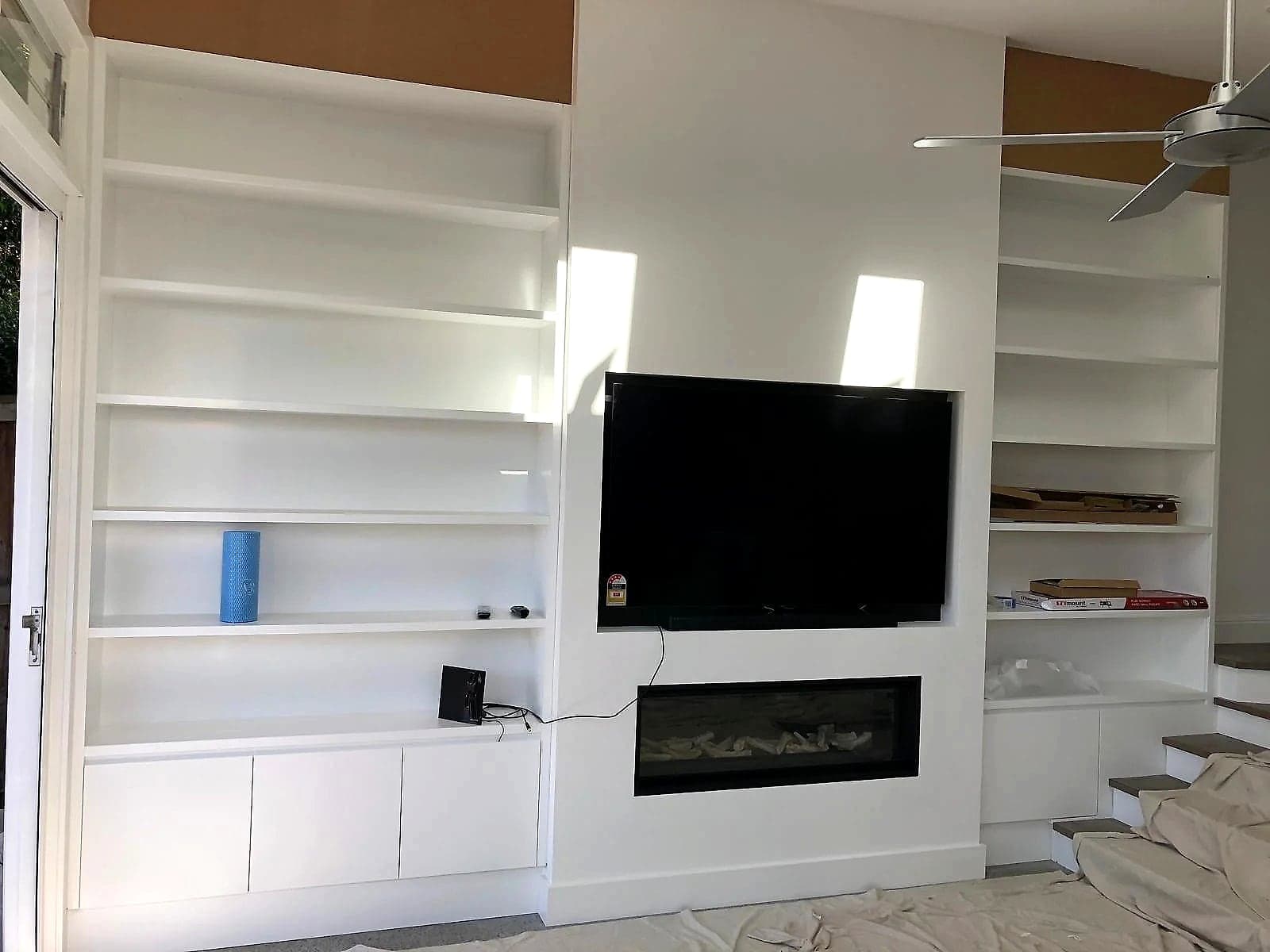
As a Sydney planning guide, a low-line entertainment unit of 2–3 metres typically costs $3,000–$7,000, a study or home office desk with storage $3,000–$8,000, and a full-wall entertainment unit with shelving $8,000–$18,000. These are planning ranges, not a quote: the price for your joinery is confirmed in a written quote after a measure of the room.
| Scope | Typical range (AUD) |
|---|---|
| Low-line entertainment unit, 2–3 metres | $3,000–$7,000 |
| Study or home office desk and storage | $3,000–$8,000 |
| Full-wall entertainment unit with shelving | $8,000–$18,000 |
Typical Sydney prices, supplied and installed, given as a planning guide rather than a quote. Reviewed October 2026.
Custom joinery covers built-in cabinetry beyond the kitchen: entertainment units, media walls, studies and storage around fireplaces and stairs. The price follows how much cabinetry the wall needs, the finish and how much is hidden storage or open shelving.
What drives the cost of custom joinery
How much of the wall it covers. A low-line unit along one wall costs far less than full-height joinery from floor to ceiling with overheads and shelving.
The finish. Laminate is the most economical. Solid or veneered timber and 2-pac painted finishes cost more.
Storage or display. Closed cupboards and drawers, open shelves and lit display all price differently, and drawers cost more than doors.
What it has to fit around. A television recess, a fireplace, a desk with power, windows and stairs each add detail to the design and the install.
The install. Scribing to uneven walls and fitting under stairs or around bulkheads takes time on site.
| What you choose | Tends to cost more | Tends to cost less |
|---|---|---|
| Size | Full height, full wall | Low-line along one wall |
| Finish | 2-pac or timber veneer | Laminate |
| Storage | Drawers, lit display | Doors and fixed shelves |
| Integration | Fireplace, TV recess, desk with power | Freestanding television |
Where to save, and what not to cut
Ways to save:
- Mix closed and open storage. Open shelves cost less than doors and break up a long wall.
- Use laminate where it suits. A laminate or painted carcass with feature fronts keeps the look.
What not to cut:
- Planning the cables and power. A television wall or a desk needs power and data where they will be used.
- Ventilation for equipment and fireplaces. Check the clearances for a built-in fireplace.
What these choices look like in finished joinery
- A living-room wall with a fireplace. The entertainment wall fits a television recess, tall and overhead cupboards and low storage around a built-in fireplace.
- Joinery that continues around the stairs. The fireplace and stair joinery combines a television wall, a landscape fireplace, open shelving and storage around the stairs.
- A bedroom wall with television joinery. The grey bedroom storage sets a recessed television area between full-height wardrobes.
How to get an accurate joinery quote
Send photos of the wall or room, rough measurements, your suburb and what the joinery needs to do: hide equipment, hold books, frame a fireplace or make a desk.
H&R makes custom joinery in its Guildford workshop and installs it. See how custom joinery runs, or read the built-in wardrobe cost guide.
Frequently asked questions
Is an entertainment unit cheaper than a media wall?
Usually, yes. A low-line unit uses far less cabinetry than joinery that runs the full height of the wall.
Can joinery match my kitchen?
Yes. The same door profiles, finishes and hardware can be used so the rooms read together.


