Laminate vs Stone Benchtops: How to Choose
Laminate or stone? How kitchen benchtop materials compare on looks, durability, cost and upkeep — from natural stone and porcelain to where laminate still makes sense in an Australian kitchen.
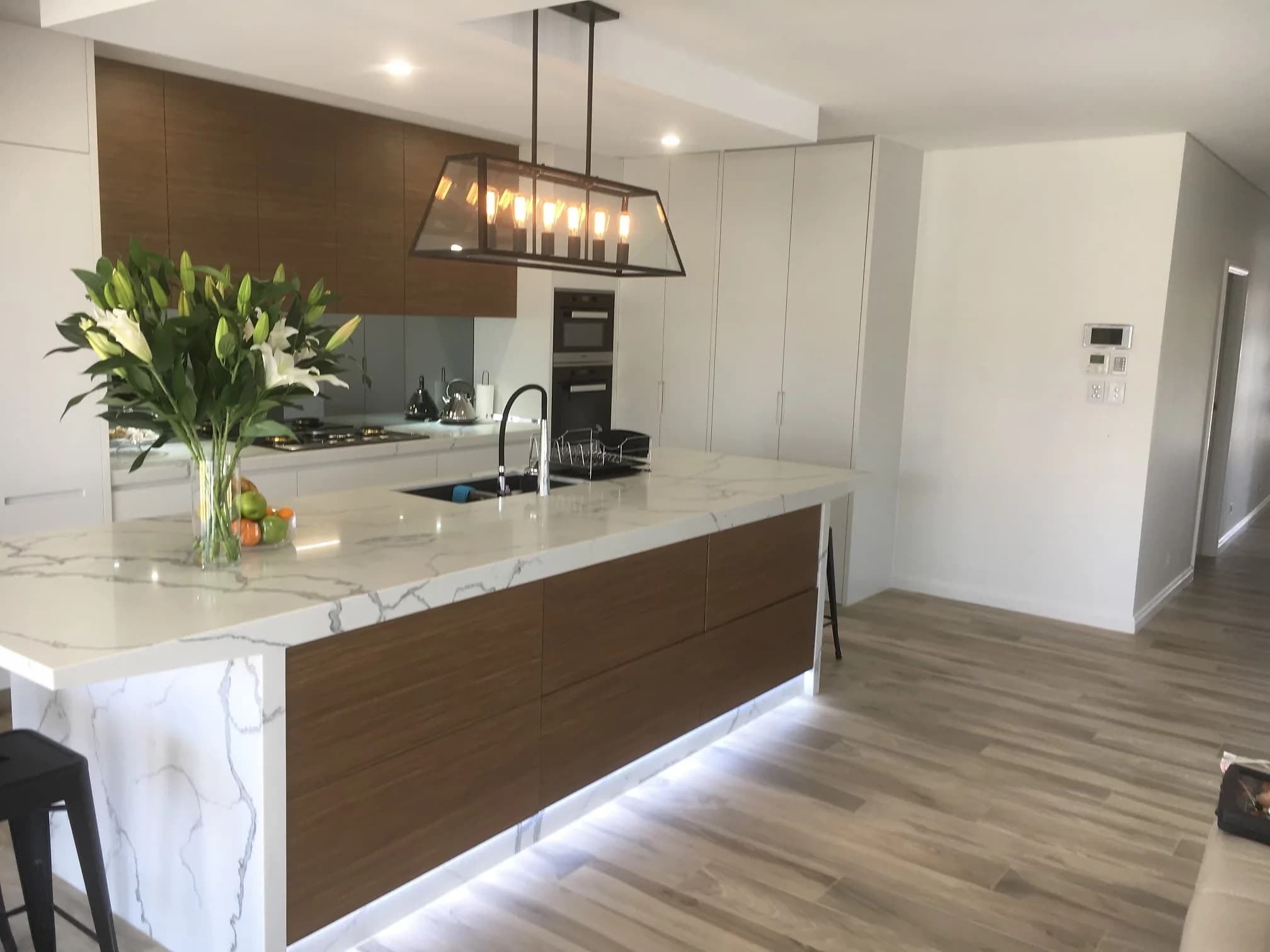
For a new kitchen in 2026, the real choice is laminate vs stone benchtops — and "stone" now means natural stone like granite and marble, or porcelain and sintered stone. It no longer means the engineered "quartz" stone most people pictured a few years ago, because that product has been banned in Australia since 1 July 2024. Laminate is the budget-friendly, low-fuss option with the widest range of looks. Natural stone is the premium choice with real character that needs a little care. Porcelain and sintered stone sit in between: very hard, heat-resistant, and increasingly popular as the stone-look alternative now that engineered stone is gone.
Here is how the three compare, and how to match the right one to your kitchen, your habits and your budget.
A note on engineered stone
Engineered stone — also sold as reconstituted, artificial or "quartz" stone — is no longer legal to make, supply or install in Australia. The ban took effect on 1 July 2024. It came in because cutting and grinding these products releases very fine respirable crystalline silica dust, which has caused serious and sometimes fatal lung disease (silicosis) in stonemasons. So if you are pricing a new kitchen, no honest supplier can offer you a fresh engineered-stone benchtop, regardless of the brand once stamped on the slab.
If you already have engineered stone installed at home, you do not need to rip it out. An existing, intact benchtop is safe to keep, use and clean. The risk comes from cutting, grinding or dry-polishing the material, which is exactly why new fabrication and installation are now off the table.
The short version
Engineered "quartz" stone is banned in Australia as of 1 July 2024. Your real options today are laminate, natural stone (granite, marble) and porcelain or sintered stone.Laminate benchtops (pros and cons)
Laminate is a printed decorative surface bonded to a chipboard or MDF core. Modern laminate has come a long way from the shiny sheets of decades past. Current ranges include convincing stone looks, matte and textured finishes, and tight edge profiles that hide the old dark seam.
Where laminate wins:
- Lowest upfront cost of the materials here, so more of your renovation budget can go to cabinetry, the cooktop or kitchen splashbacks.
- Huge range of colours and patterns, including stone and timber looks.
- Light, easy to wipe down, and no sealing required.
- Quick to fabricate, which can shorten the time your kitchen is out of action.
Where laminate asks for care:
- The core is timber-based, so standing water at a joint or around the sink can swell the board over time. Good sealing and quick wipe-ups matter.
- It scratches and can scorch, so always use a board and a trivet. Never put a hot pan straight down.
- A deep chip or burn generally cannot be polished out. You live with it or replace the section.
Laminate suits rentals, family kitchens that take a beating, and anyone who wants a clean, current look without a big spend.
Natural stone: granite and marble
Natural stone is quarried from the ground and cut into slabs, so every piece is genuinely one of a kind. The two most common kitchen choices are granite and marble, and they behave quite differently.
Granite is dense, hard and very heat-tolerant. It handles a hot pot and daily knocks better than almost anything else in a domestic kitchen. Colour and movement vary by slab, so it pays to view the actual stone before it is cut.
Marble is prized for its soft veining and bright, luminous surface, and it is a favourite for island benches and baking zones because it stays cool. The trade-off is that marble is softer and more porous: it can etch (dull marks) from lemon, wine or vinegar, and stain if a spill sits too long. Many homeowners love it anyway and accept that it earns a lived-in patina.
Both granite and marble need periodic sealing to resist staining, and both reward a quick wipe rather than letting spills sit. Slabs are heavy and effectively permanent once installed, so accurate templating and a properly built cabinet base matter. That is where coordinating the benchtop with the joinery from the start makes a real difference.
Granite
Hard, heat-tolerant and forgiving of daily use. Great for busy cooking kitchens. Needs sealing; appearance varies slab to slab.Marble
Soft veining and a cool surface loved for islands and baking. Etches and stains more easily, so it suits people happy with a natural patina.Porcelain and sintered stone
Porcelain and sintered stone are manufactured slabs, but they are not the banned product. They are made from natural minerals fired or compacted at very high heat, and they fall outside the engineered-stone ban, so they remain legal to fabricate and install with sensible dust controls during cutting.
What they offer:
- Very hard and scratch-resistant, and highly heat-resistant, so a hot pan is far less of a worry than on laminate.
- Non-porous, which means no sealing and strong resistance to stains and acids like lemon and wine.
- Stone, concrete and even marble-look finishes, often in large slabs with slim profiles.
- Many slabs can run up the wall as a matching splashback for a continuous look.
The trade-offs are a higher price than laminate and the need for an experienced fabricator, because the slabs are hard and can chip at an edge if mishandled. For a lot of Sydney homeowners replacing an old engineered-stone top, porcelain or sintered stone has become the natural like-for-like upgrade.
How the three compare
| Material | Look | Durability and upkeep | Relative cost |
|---|---|---|---|
| Laminate | Wide range, including stone and timber prints | Easy to clean, no sealing; can scratch, scorch and swell at joints if water sits | Budget-friendly |
| Natural stone (granite, marble) | Genuine, one-of-a-kind veining and depth | Periodic sealing; granite very tough, marble etches and stains more readily | Premium |
| Porcelain or sintered stone | Stone, concrete and marble looks in slim slabs | Non-porous, no sealing, heat- and scratch-resistant; edges need a skilled fabricator | Mid-range to premium |
How to choose
Start with how you actually cook and live, not just the photo you saved.
- Budget-led or a rental. Laminate gives you the most look for the least money and frees up funds for the rest of the kitchen renovations, like better cabinetry, soft-close hardware or a stone splashback.
- A hard-working family kitchen. Granite or porcelain shrug off heat and daily knocks. If you regularly slide hot pans about and want to stop thinking about trivets, these are your friends.
- Low maintenance above all. Porcelain and sintered stone are non-porous and need no sealing, so they are the easiest of the stone-look options to live with.
- Character, and you do not mind a patina. Marble rewards you with a surface nothing else matches, as long as you accept a few etch marks as part of the deal.
Two practical tips. First, always view a real slab of natural stone before it is cut, because movement and colour vary and a small chip will not show the whole story. Second, think about the benchtop, cabinetry and splashback as one job rather than three. Edge profiles, sink cut-outs, the cabinet base that carries a heavy slab, and where a splashback meets the bench all need to line up.
H&R Kitchens plans kitchen benchtops with the cabinetry and splashback requirements so dimensions, edge details, cut-outs and joins can be discussed as part of the whole kitchen brief.
Frequently asked questions
Is engineered or quartz stone really banned in Australia?
Yes. Since 1 July 2024 it has been illegal to manufacture, supply or install engineered stone (also called reconstituted, artificial or quartz stone) anywhere in Australia, because of the silicosis risk to workers cutting it. No reputable supplier can fit a new engineered-stone benchtop.
I already have a quartz benchtop. Do I have to remove it?
No. An intact, already-installed engineered-stone benchtop is safe to keep, use and clean. The danger comes from cutting, grinding or dry-polishing the material, so the rules target new fabrication and installation rather than existing tops.
Is porcelain the same as the banned stone?
No. Porcelain and sintered stone are different products that fall outside the engineered-stone ban, so they remain legal to fabricate and install with proper dust controls during cutting. They have become a popular like-for-like replacement for old engineered-stone tops.
Which benchtop is best for a busy family kitchen?
For heat resistance and toughness, granite and porcelain are hard to beat, and both handle hot pans and daily wear well. Laminate is the value pick if you protect it with boards and trivets, while marble suits people who love its look and accept a natural patina over time.